Medieval Cathedrals & Modernism: an Afternoon in Barcelona's Old City
Home to no less than nine UNESCO World Heritage Sites, Barcelona is the perfect destination for a short city-break or an ideal addition to a multi-stop Spanish or Mediterranean itinerary. Tucked between the mountains and the sea, this Catalonian cultural centre is famed for its Gothic and Modern art and architecture, home to Picasso and Gaudi, music, food, and a buzzy outdoor atmosphere. With something for everyone, what’s not to love?
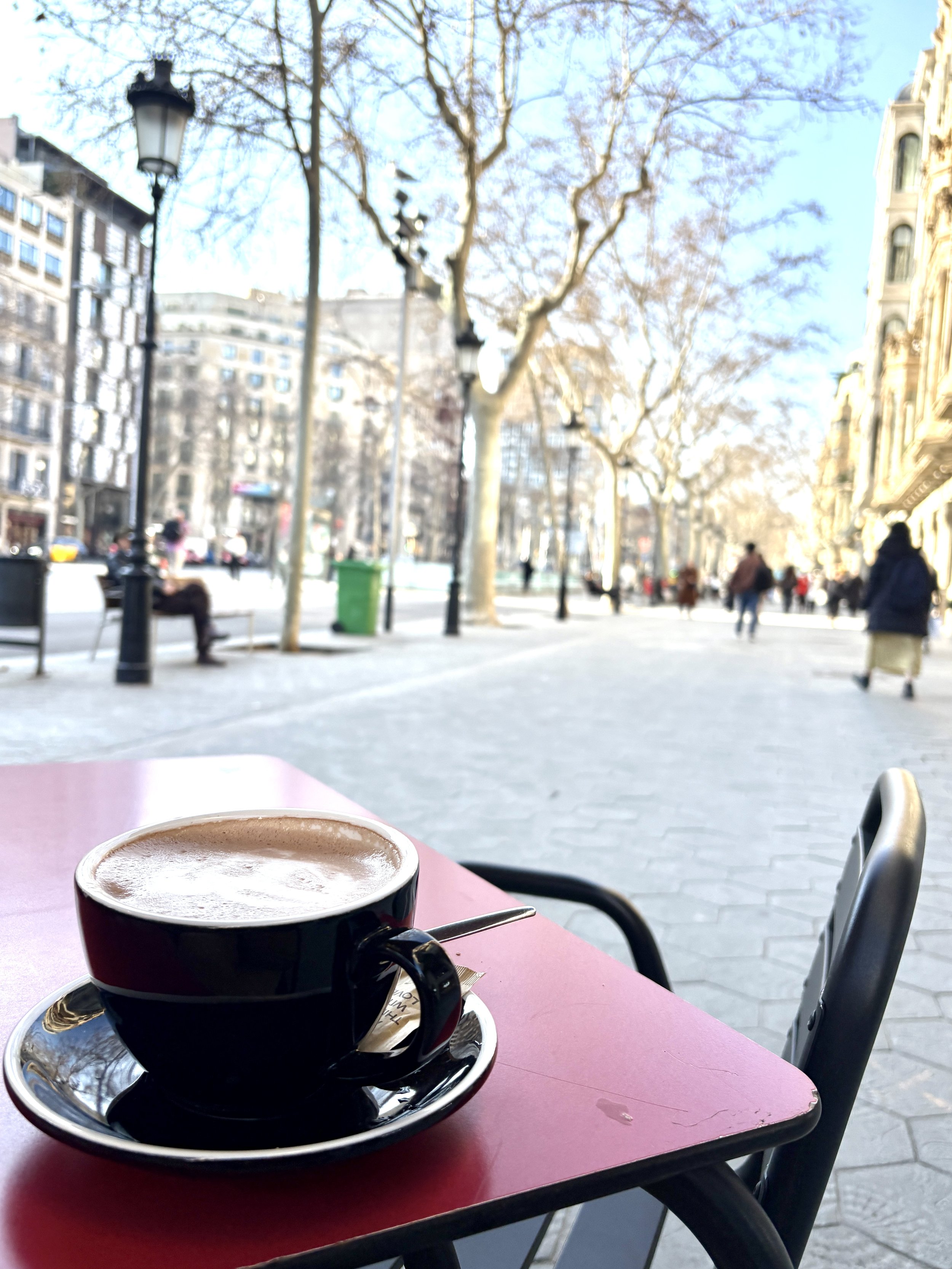
It’s midday on the last Tuesday in February. Tiny leaves skitter in the breeze across Pla de la Seu in front of Catedral de Barcelona. A man sings and plays guitar near the steps while two street performers dressed in white robes like angels or saints bend long pink balloons into heart-shaped frames then tempt passing tourists to take photos for a fee. I’m watching this unfold from the vantage point of a cafe on the edge of the square, with a crisp rose and a plate of fresh grilled artichokes accompanied by a velvety romesco sauce. The endless grey skies and rain of English winter suddenly seem so far away.
I’m on a lifelong quest to visit as many cathedrals as possible, so they are always high on the list when I arrive in a new city. It always feels like a pilgrimmage, adding my own footsteps to the centuries of travelers and worshippers who got there first and who will follow after. I learn a lot, too, grounding myself in the history of a place through the story of the building, the architecture, the interweaving narratives of religion and politics. Today, Barcelona cathedral (known officially as the Cathedral of the Holy Cross and Saint Eulalia) serves this purpose with open arms, offering context, inspiration, and a calm respite from the morning’s travel from London to Barça.
Anchoring the heart of the city’s Gothic quarter, the cathedral took more than 150 years to complete, with work taking place between the 13th and 15th centuries (1200-1500). Consecrated in 1339, the cathedral’s main structure and façade weren’t completed until 1417, while the cloisters were completed in 1448.
Arriving into the cool shadows of the nave I’m taken by the sheer height of it all - the towering columns, soaring vaulted ceilings, the light pouring in from sky-high stained glass windows. The ornate chapels lining the perimetre, paying homage to 40 different saints (the cathedral actually pays homage to more than 140 in total). Some are more intricately decorated than others. Studying them I wonder - in my own contemporary, non-Catholic way - whether it’s a question of track record, popularity, or finance that determines the level of luxury in each saints’ assigned quarters. More to research when I get home. For the moment, I am content to stroll and admire.
At three of the chapels I pause for longer, to light candles for loved ones and friends, and to say a prayer for our world. Behind me, on the other side of a closed door, a choir sings.
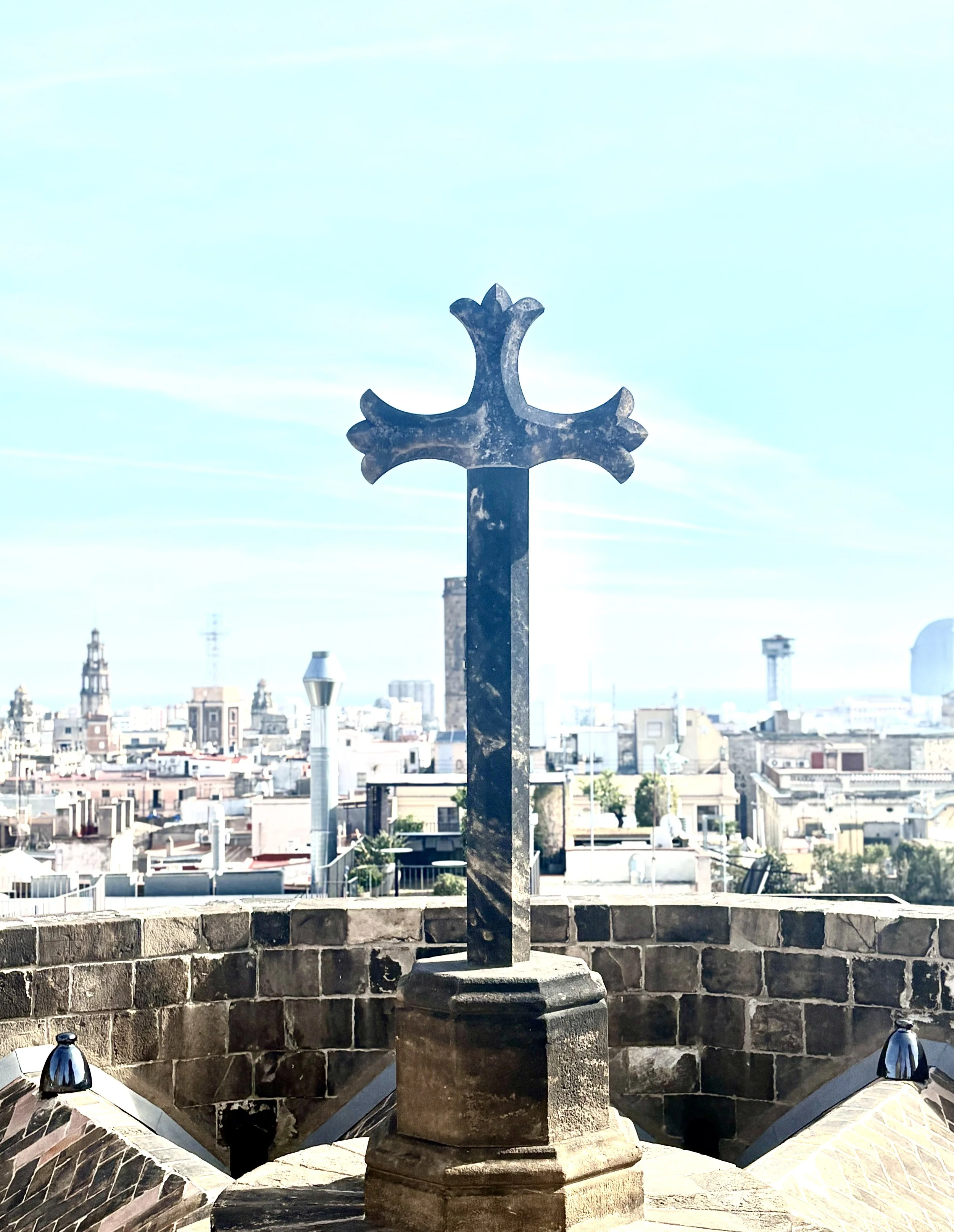
Then I make my way up and out onto the rooftop. It’s something of a revelation — and if you have ever wondered (like me, even though I am not a fan of heights) what it might be like to wander around on the roof of one of an iconic architectural and religious structure - well, your time has come.
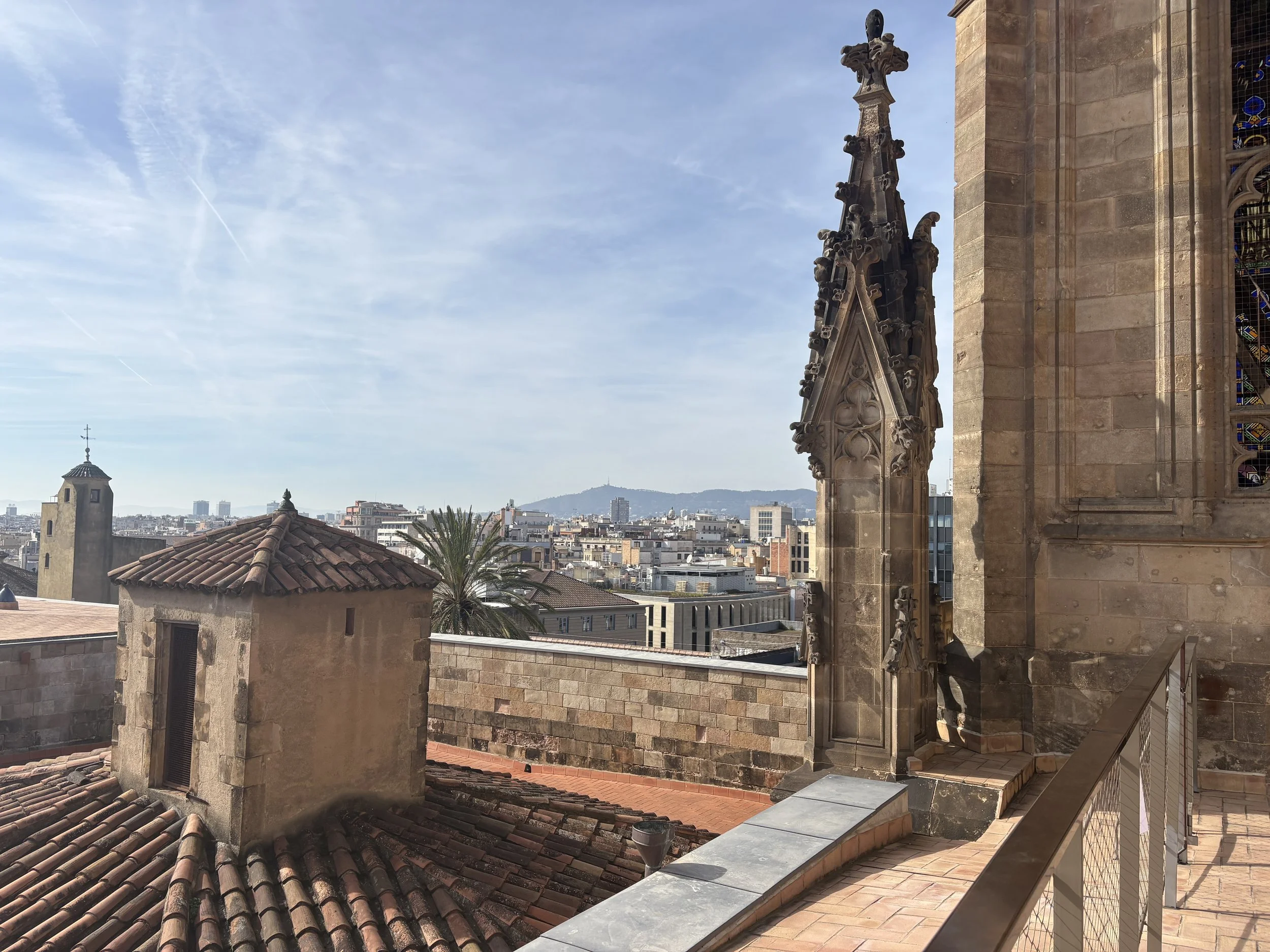
Barcelona is one of a growing number of cathedrals across the UK and Europe that offers roof access for visitors. Apparently, it’s incredibly popular — and I’m about to see why. Up, up I go, ascending the winding narrow stairs until I surface into the wide sunlight and ensconsing peace that belies the noisy hurry and bustle in the Pla de la Seu below. If the body of the cathedral offers space for worship and focus, the rooftop, at least on this particular day, is a place for one’s spirit to transcend (in an earthly sense, anyway). (Note: If you have children in tow, or even if you don’t, it’s also a place to look for the myriad gargoyles, saints, biblical figures, animals, and mythical creatures built into the cathedral’s dramatic gothic spires).
Taking the welcome opportunity to simply be still for a moment, I stand in the sunlight under the blue sky, basking in the quiet, losing myself in the encircling views of the city from mountains to sea.
Back on ground-level, I visit the small, perfectly formed cloisters squared around a quiet oasis of palm trees and orange trees, so quiet it’s hard to believe there is a busy street on the other side of the big wooden door. In the centre, the steady bubbling of the fountain in the sunlight (the original water supply for the cathedral, now the Font de Sant Jordi (Fountain of Saint George), sculpted by Emili Colom I Comerma in 1970) becomes a meditation. (During the feast of Corpus Christi, an egg is placed on the water jet making it appear to dance, a traditional event called ‘L’ou com balla,’ or the Dancing Egg).
As I walk the cloister, 13 white geese appear incongruously, and a little bit by magic, in the centre of the garden. It turns out there are kept at the cathedral in honour of Saint Eulalia, the co-patron saint of Barcelona, who was martyred at age 13.
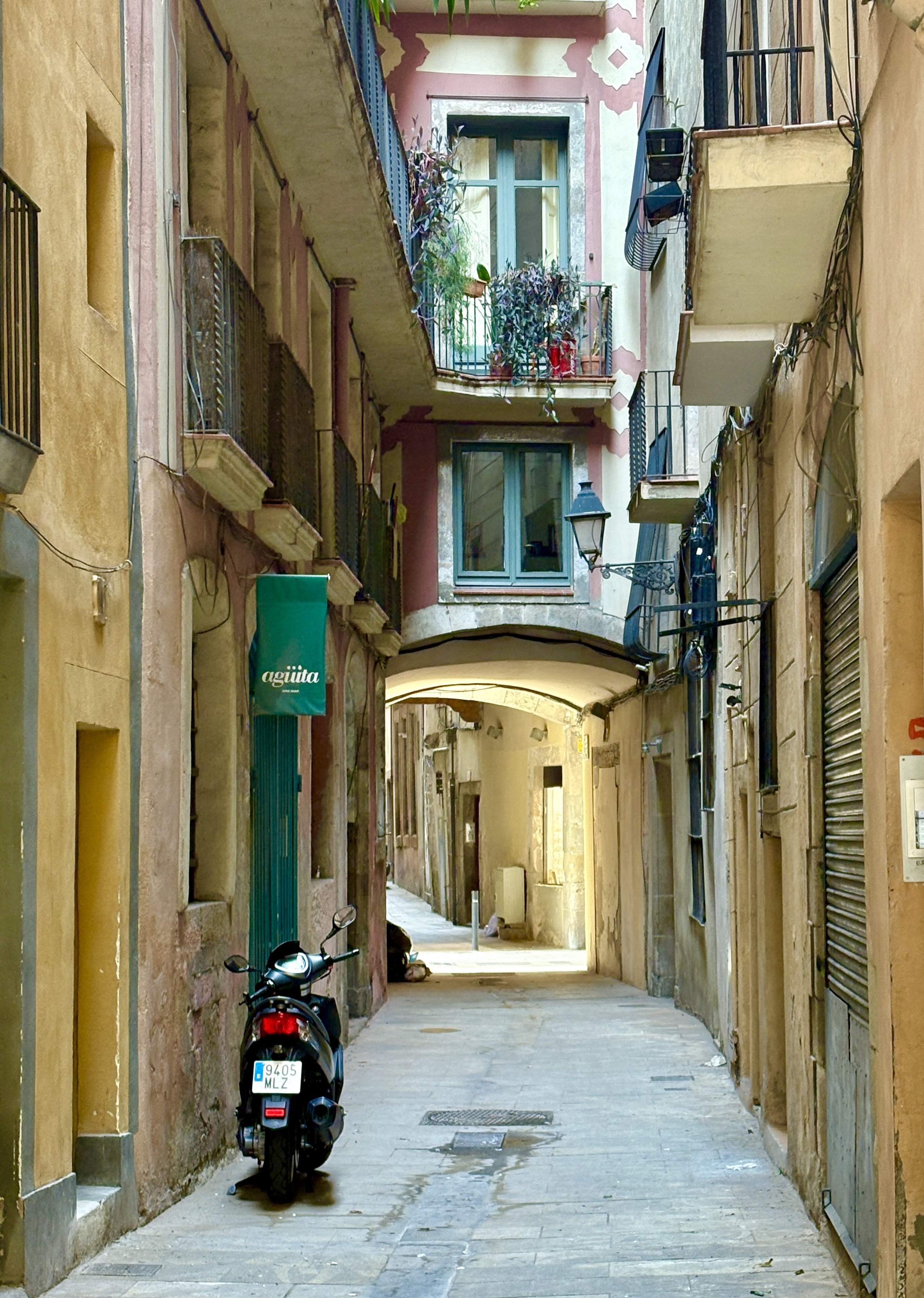
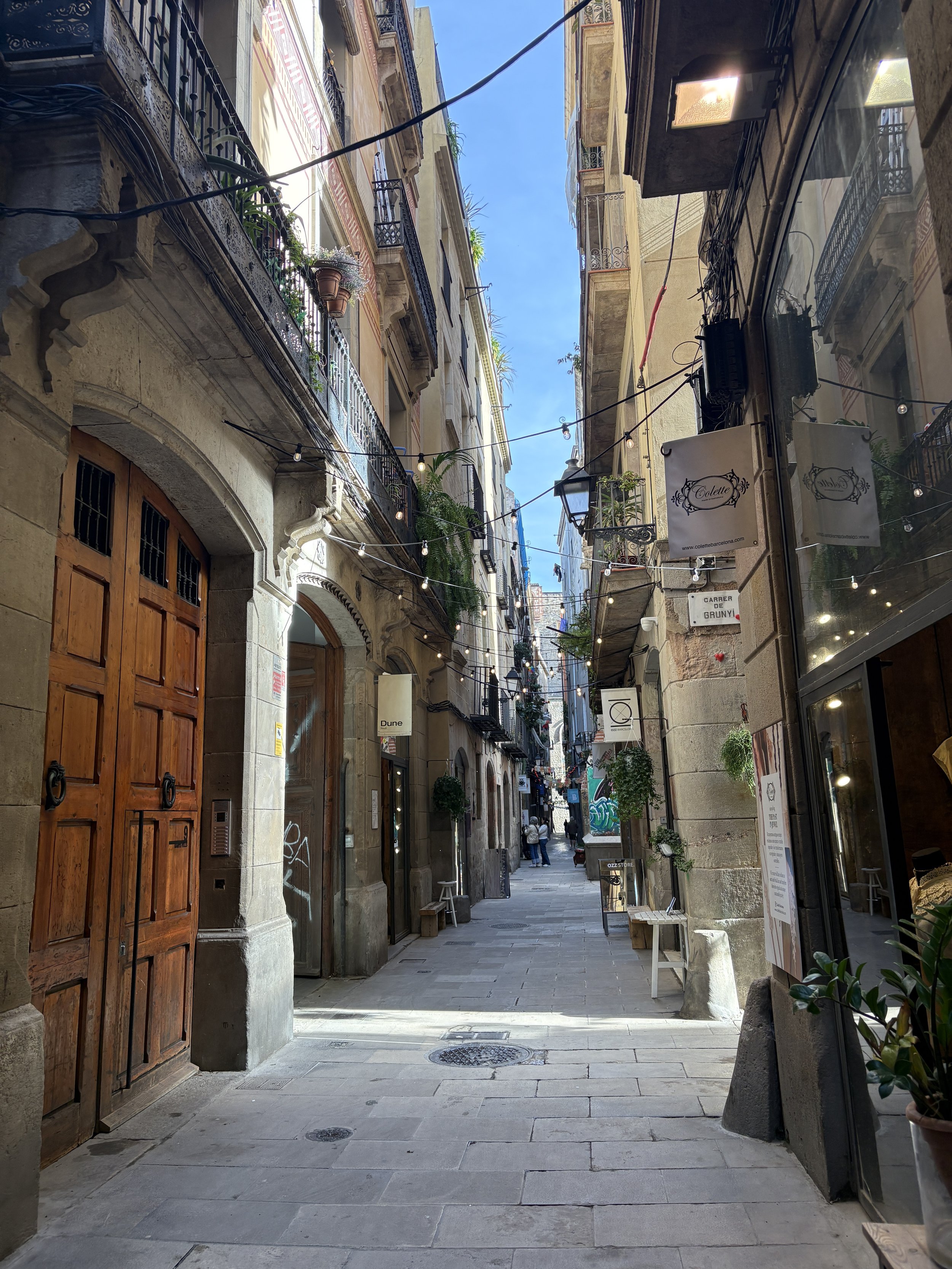
Adjusting to the busy streets after the cool peace of the cathedral and the quiet of the cloister takes me a moment. Then I’m off again, plunging into the winding, labyrinthine alleys of the medieval Barri Gòtic, or Gothic Quarter with no immediate agenda.
I’m not much of a map reader, preferring to follow my nose, wander at will, let a place - and experience - unfold as I go. I joke this means that I may not always be going in the right direction, but I always go with confidence. Admittedly, this can sometimes mean I end up in ‘less advisable’ areas (as with an earlier detour en route to the metro stop). More often than not, it also means I discover or experience something I would have likely missed by following a prescribed route. It’s an approach that’s not everyone’s cup of tea, but it works for me. And in the spaghetti of streets that is the Gothic Quarter, it worked perfectly for a voyage of discovery as I roamed my way through the afternoon exploring cafes, boutiques, galleries, courtyards, Roman ruins, Gothic churches and, more often than not, simply looking up at the jungled maze of balconies and laundry, planter boxes and bikes, painted shutters and parcels that form the backdrop of every day life.
Eventually I find my way to the old city neighbourhood of El Born, which sits adjacent to the Gothic Quarter as a sort of artier, more bohemian sister. It’s home to my next stop: Museu Picasso — the Picasso Museum.
Set across five palaces in the centre of El Born, Museu Picasso is not the central repository of all great Picasso works (as you might reasonably assume). Most of the master works actually reside in other collections and museums in Spain and around Europe (Guernica in Madrid, The Weeping Woman at the Tate, and the largest collection at Musee Picasso in Paris). But as I quickly discover, this doesn’t make the Museu Picasso any less interesting - or worth a visit. The museum focuses on Picasso’s works through the lens of his relationship to Barcelona. Having moved here with his family at 14, he retained a lifelong connection with the city. And from his earliest (boyhood) works to his emergence as a Cubist pioneer, the museum’s collection walks us through that story.
Realist works and sketches from Picasso’s youth all the way through to his evolution as a Cubist pioneer are featured in the Museu Picasso collection, creating a visual narrative that walks us through this journey from veritable anonymity to one of the most influential artists in contemporary history. While seeing pieces from his blue period, and seeing the evolution of his cubist perspective through a series of portraits of his wife and daughter were fascinating, I was particularly drawn to the beauty of his earlier realist works — and his decorative pieces (mostly ceramics), as well as a large white window frame illustrated with whimsical motifs of Meditarrean life — fish, flowers in vases, vines, a tiny blue farmer driving a tiny blue tractor - the religious iconography and the humour of it — both a story and a window (if you will) on to life as he must surely have seen it.
Outside the museum there is a photographer selling his works by hanging them on the stone wall of the palace. Muted scenes from India, Nepal, Morocco, Spain printed on watercolour paper rendered with softness and kindness. The artist appears beside me as I move down the line of images. He has been to collect a coffee (a proper cup of coffee in a ceramic cup with a saucer no less) from a nearby cafe. We talk as he drinks it. He is a transplanted Argentinian, and a former graphic designer who turned to photography after a ten-year motorcycle journey across Europe and into Asia. We talk a while about some of his pieces - the time, the place, the moment, what he felt, what he saw, how he went back to find the girl in one of his photos, how he now sponsors her so that she can go to school. The artist sharing other people’s stories through is work telling me his own.
It reminds me, gently, and not for the first time, that this is really why we travel (and why, artist or not, so many of us take pictures). Not just monuments and landmarks, icons and must-sees, but for connection, across time and place, with ourselves, our traveling companions, and those we meet on the journey. And that taken together, these are what make the moments, both ordinary and extraordinary.
emma x
p.s. Thinking of your own Spanish sojourn? Get in touch.